HubSpot's 2024 Traffic Drop: Lessons in Topical Authority Penalties
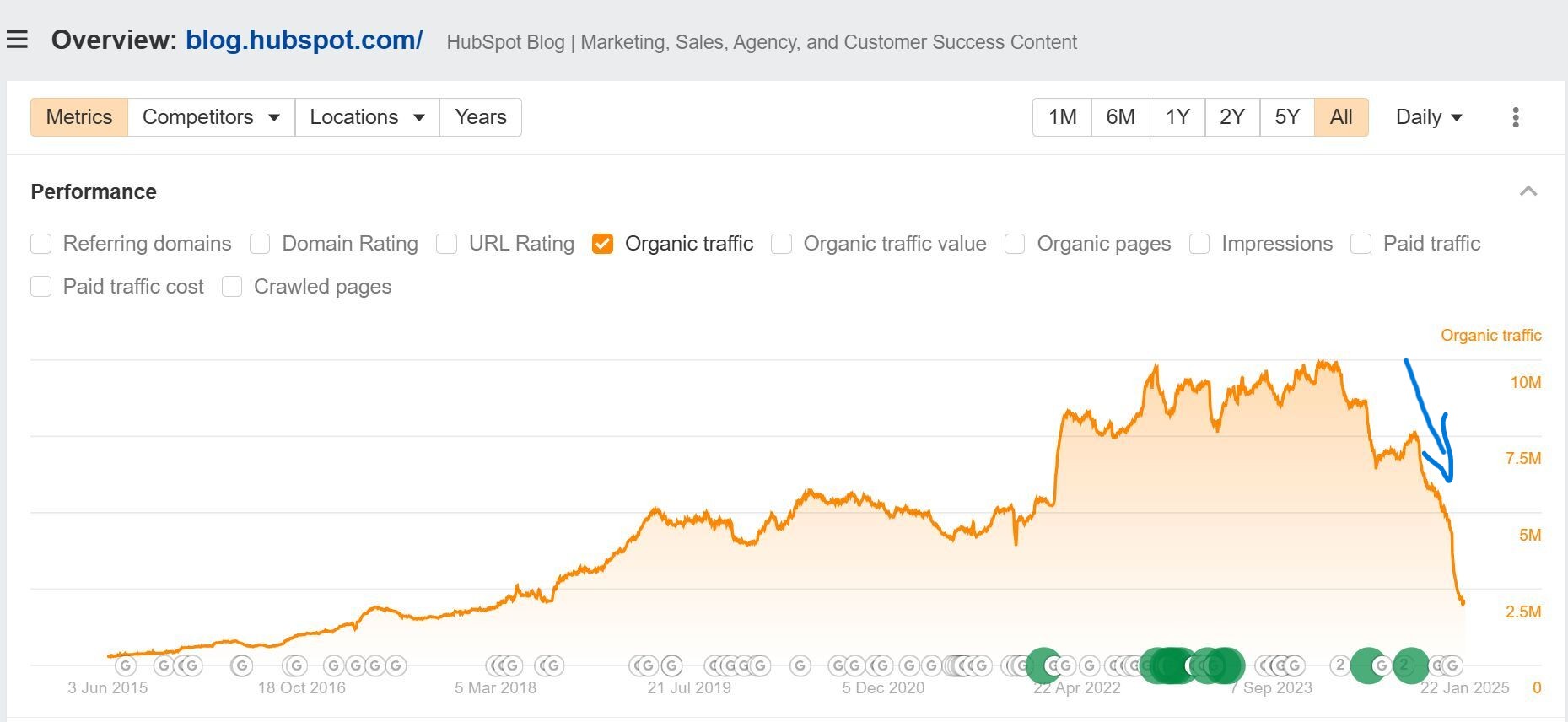
The HubSpot topical authority penalty of 2024 was an algorithmic demotion that resulted in a significant traffic decline.
HubSpot's monthly Google clicks fell from approximately 23 million to 5 million.
This drop occurred because Google's algorithms devalued the large volume of content HubSpot had published outside its core expertise of CRM, sales, and marketing software.
Topical Authority in 2026
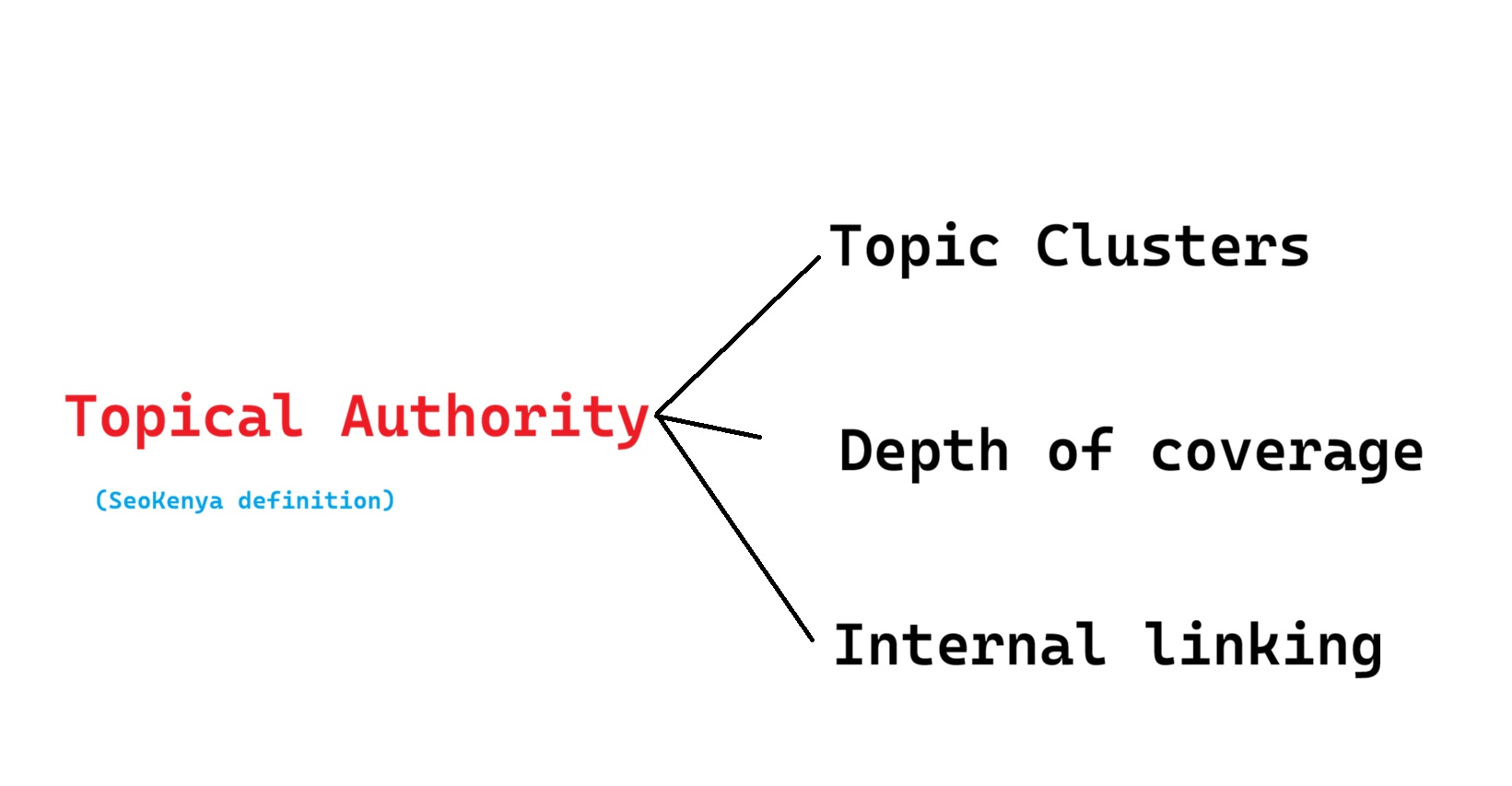
Topical authority is a website's demonstrated expertise across a specific subject. Google uses this signal to identify definitive information sources for an industry.
This concept is a core part of Google's E-E-A-T framework, which guides how algorithms evaluate and rank content.
How Topical Authority Is Defined
Topical authority measures a site's expertise on a whole subject, not just individual keywords. It is built by publishing extensive, high-quality, and interlinked content that covers a topic from multiple relevant angles.
A site with high topical authority is seen by search engines as a reliable destination for users.
How Google Algorithms Assess Topical Authority
Google's ranking systems, such as the Helpful Content system, evaluate a site's depth of topic coverage. These systems analyse the internal links between pages to assess if a site demonstrates E-E-A-T across a topic cluster.
A website that deeply covers "digital payment solutions for Kenyan SMEs" will earn more authority than a site with one article on the subject.
What Caused the HubSpot 2024 Traffic Drop
Google's ranking systems in 2024 increased their focus on content relevance and niche expertise. The change was a continuous algorithmic adjustment, not a single named update.
These systems learned to better identify a website's core topic and devalue content published outside of that niche. HubSpot's penalty was an algorithmic re-evaluation, not a manual action.
The Severity of HubSpot's 2024 Traffic Decline
HubSpot's organic traffic from Google Search dropped from approximately 23 million to 5 million monthly clicks. The cause was the high volume of content published on topics unrelated to its core business.
Articles on subjects like "how to write a resignation letter" diluted Google's perception of HubSpot as a specialist in marketing software, which weakened its overall authority.
How Kenyan Businesses Should Define a Content Niche
Kenyan businesses must define a core content niche to build a stable SEO strategy. This requires focusing resources on topics of genuine expertise that provide value to a target audience.
Chasing high-volume keywords outside a defined niche risks long-term ranking suppression.
How to Identify a Core Niche
A core niche is identified by analysing primary products, services, and customer problems. Keyword research tools help explore topics related to business expertise.
A Mombasa logistics company, for example, should create content about "clearing and forwarding in Kenya," not "business management tips."
Impact of Off-Niche Content on Your Authority
Publishing content outside a core niche wastes marketing budget and dilutes topical authority.
An algorithmic penalty can suppress rankings for off-topic content and core commercial pages. HubSpot's 2024 traffic drop demonstrates this risk.
Ways that a Kenyan SMEs can Build Topical Authority
Kenyan SMEs can build strong topical authority with a focused content strategy that prioritises depth over breadth.
A disciplined approach ensures every published article reinforces the site's core expertise. Two primary methods support this goal.
[Book an SEO consultation to build authority]
Use Content Clusters and Pillar Pages
A content cluster is an SEO method for organising content to build authority.
The structure uses a central "pillar page" for a broad topic, like "M-Pesa for Business Guide."
Multiple "cluster pages" are then created to cover specific sub-topics, such as "how to use Lipa na M-Pesa" and "M-Pesa payment integration."
Each cluster page links back to the pillar page, forming a strong semantic relationship for Google's algorithms.
Demonstrate E-E-A-T Signals
Websites must demonstrate Experience, Expertise, Authoritativeness, and Trustworthiness (E-E-A-T).
A Kenyan business can show E-E-A-T by publishing detailed author bios, featuring case studies from local clients, and providing clear contact information. These signals build trust with users and search engines.
How you can Recover From a Topical Authority Penalty
An algorithmic penalty for weak topical authority appears as a site-wide decline in rankings and traffic.
Recovery requires a content audit to identify and remove or update off-niche content. The next step is to refocus content strategy on building deep, relevant clusters around a core business topic.
Managing Authority Across Diverse Niches
A business that serves multiple customer segments faces a challenge in maintaining a tight niche. You can also face the same challenge when you want to expand your service offering or your traffic.
For example, a Nairobi financial firm might offer both personal loans and SME accounting. The correct strategy is to build separate, deep content clusters for each service line, not a single generic "finance" blog.
Diluted authority damages local search performance, as Google prioritises demonstrated local expertise for queries like "best corporate lawyers in Westlands."
Steps you Can Take Today to Audit Content for Topical Relevance
A content audit is the first action for recovery and prevention.
Tools like Google Search Console and Google Analytics 4 help identify pages irrelevant to your core niche or with low organic traffic.
The audit process involves three steps.
- Identify Off-Niche Content: Review and categorise all content as core, related, or off-niche.
- Analyse Performance: Use Google Search Console to find pages with low impressions and clicks over 12 months.
- Decide on an Action: For each off-niche or low-performing article, choose to delete (and redirect the URL), update for relevance, or consolidate with another page. This content pruning strengthens the site's topical focus.
How to Measure and Protect Topical Authority
Protecting a site from algorithmic penalties requires ongoing measurement and a disciplined content strategy.
You should monitor performance in Google Search Console, specifically the rankings for core commercial keywords.
Use Google Analytics 4 to track user engagement metrics for your content clusters. Steady organic traffic growth to pages within your defined niche indicates that topical authority is strengthening.
Key Concepts for Topical Authority Management
| Concept | Negative Factor | Corrective Action |
|---|---|---|
| Topical Dilution | Publishing excessive off-niche content | Perform a content audit and prune irrelevant pages. |
| Weak Authority Signals | Lack of deep, interconnected content | Build pillar pages and topic clusters around core services. |
| Poor E-E-A-T | No demonstration of real-world expertise | Add author bios, local case studies, and business details. |