Local Keyword Research in Kenya with Google Business
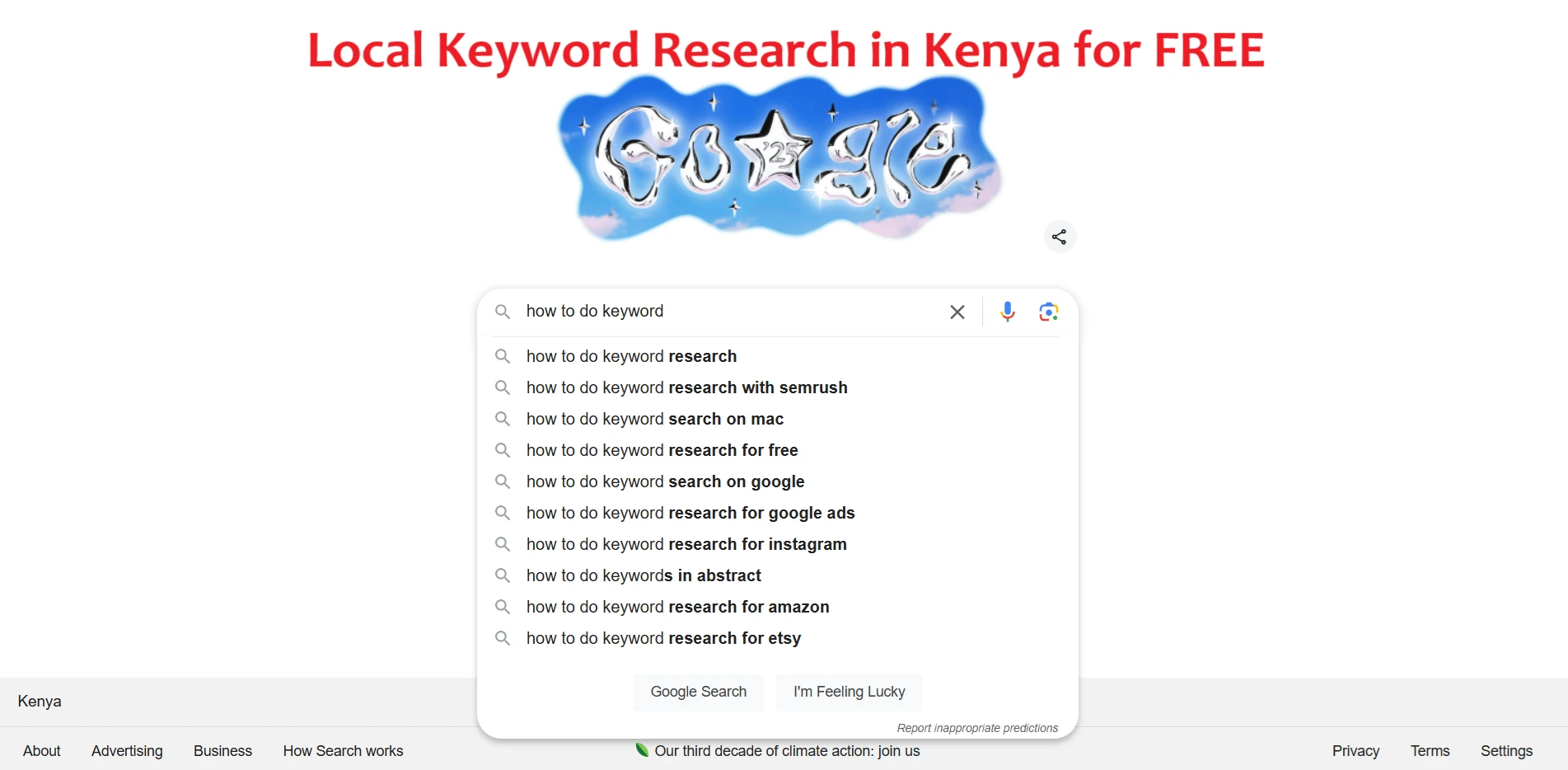
Expensive global tools for local keyword research in Kenya can be a source of frustration. Many platforms lack granular Kenyan data or are too costly for most small and medium-sized businesses.
Some tools, such as Ahrefs, have improved their Kenyan databases but still miss hyper-local search terms that drive customer action. A tool might show data for "plumber Nairobi" but miss a specific query like "emergency plumber Westlands."
An expensive subscription is not the answer. The most accurate and relevant free tool for local keyword research is your Google Business Profile (GBP).
This guide shows you how to use your GBP for effective, data-driven local SEO in 2026.
How Your Google Business Profile Provides Local Keyword Data
Your Google Business Profile is more than a listing; it is a direct line to your customers' search behaviour. The platform shows the exact words and phrases people in Kenya use to find your business on Google Search and Maps.
The Performance section contains the specific search terms that lead customers to your profile. This is real-world information from your target audience, not estimated data, which makes it an invaluable free keyword tool.
These insights help you create or optimise content that matches what potential customers in your city or county are searching for.
Finding Local Keywords in Your Google Business Profile
Accessing this data is straightforward using Google's built-in performance reporting. Here are three simple steps to find your localised keywords.
Step 1: Access Your Performance Report
First, log into your Google Business Profile. From the main dashboard, locate and click on the Performance section. This area contains all the analytics about how users interact with your profile.
Step 2: Find the "Searches" Breakdown
Inside the Performance report, scroll down to find the card detailing the search queries customers used to find your business.
This section displays a list of the top search terms that triggered impressions for your profile. You can see the exact phrases and the number of searches for each.
Step 3: Analyse and Segment Your Keywords
Review the list of search terms to identify patterns and opportunities. Note if customers are searching for specific services, product names, or using location-based queries like “computer repair near Moi Avenue”.
Group these keywords into categories: branded (your business name), service-related (e.g., "corporate catering Nairobi"), and location-specific (e.g., "best coffee shop in Mombasa"). This analysis forms the foundation of your content strategy.
Using GBP Keyword Data to Improve Your Website
After compiling your list of localised keywords, you can use them to improve your website's visibility and attract more qualified traffic.
Create New Content for Unaddressed Keywords
Your GBP might reveal high-volume search terms that your website does not currently address. This signals an opportunity to create new content.
- Location-Specific Pages: If "affordable event planner in Kisumu" is a top query, build a dedicated page detailing your event planning services specifically for the Kisumu market.
- Service-Specific Pages: If users are searching for "24-hour electrician in Nyali," a new page that highlights your emergency services in that exact location will directly meet that search intent.
Update Existing Content with New Keywords
For keywords relating to pages you already have, a content refresh is a quick and effective way to boost performance.
- Refresh On-Page Elements: Integrate your newly found keywords naturally into page titles, meta descriptions, and headers (H2, H3). Our guide to on-page SEO provides further tips.
- Expand Your Content: Add new sections or a FAQ to answer questions related to the keywords. For instance, if "Lipa na M-Pesa till number for..." is a query, ensure your payment details are clear.
- Optimise for GBP Itself: Use these keywords in your GBP service descriptions, product listings, and regular GBP Posts to reinforce your relevance for these terms.
Finding Keyword Ideas in the GBP Questions and Answers
Your GBP offers more than the Performance report. The Questions & Answers (Q&A) section helps with understanding user intent and finding long-tail keywords.
Monitor the questions people ask on your profile, as they are often phrased exactly as a search query. Answering these questions publicly helps the individual customer and creates a keyword-rich resource on your profile that can assist with rankings.
Google Business Profile Data Compared to Paid SEO Tools
Kenyan businesses should understand the key differences between data from their Google Business Profile and data from paid SEO tools.
| Feature | Google Business Profile Data | Paid SEO Tool Data |
|---|---|---|
| Cost | Completely free. | Requires a monthly subscription. |
| Data Source | Actual search queries to find your business. | Market-wide estimates and competitor data. |
| Geo-Specificity | Hyper-local (e.g., "tyre centre Industrial Area"). | Limited to national or major city level. |
| Relevance | 100% relevant to your existing audience. | Broader data, including non-relevant terms. |
Practical Next Steps for Local Keyword Research
Local keyword research in Kenya does not need to be complex or expensive. Using your free Google Business Profile provides direct access to what your real customers are searching for.
This strategy shifts your work from guesswork to a data-driven approach. Your local SEO efforts become more focused and effective, helping you find high-intent keywords, create relevant content, and optimise existing pages with precision.
Log into your Google Business Profile and review the Performance and Q&A sections. Use these insights, which are tailored to the Kenyan market, to improve your online visibility.
This article is part of a series on practical SEO. For further reading, see our SEO blog or our information on local SEO services in Kenya.