Beyond Viator & TripAdvisor to Get Direct Safari Bookings in Africa
Kenyan tour operators using platforms like Viator and TripAdvisor may spend up to 20% - 30% of their revenue on each booking. For example, a typical $3,500 luxury family itinerary can result in a $700 to $1,050 commission payment directly to the Online Travel Agency (OTA).
This distribution model impacts net profit margins and can influence the growth pathways for local safari operators.
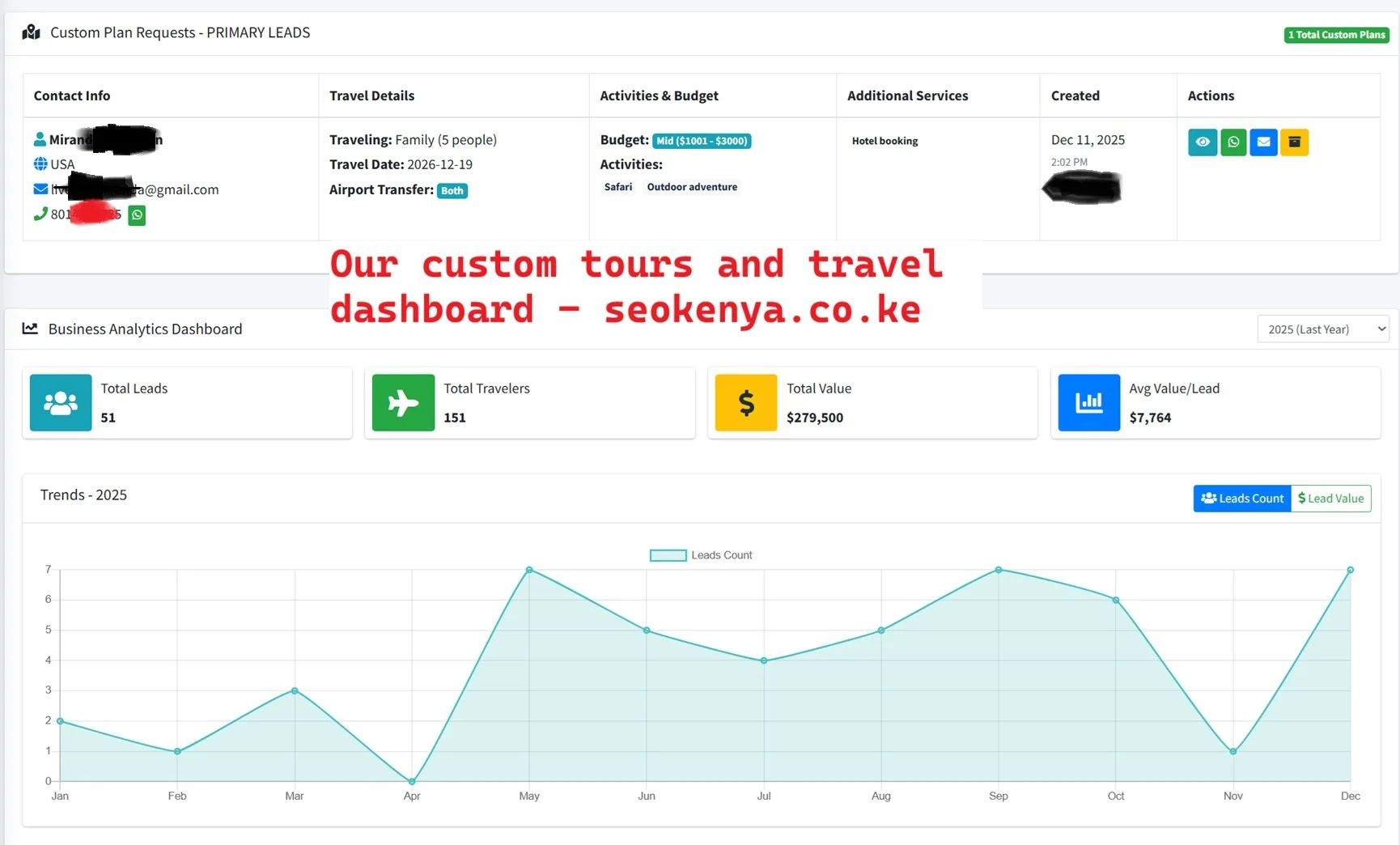
The Exact Financial Impact of OTA Commissions on Kenyan Tour Packages?
International Online Travel Agencies generally charge a commission rate of 15% to 30% on the gross booking value. This fee is deducted from top-line revenue for a Kenyan tour operator before local operational costs are addressed.
As a result, less capital may be available for high-quality guides, vehicle maintenance, and partnerships that support a premium Kenyan safari experience.
On a $3,500 family safari package, the OTA fee of $700 to $1,050 can be similar to, or even exceed, the operator's net profit for that booking.
This financial consideration makes long-term business growth more challenging and can create a reliance on third-party platforms.
These platforms are structured to support their own marketplace ecosystems, which can sometimes limit an individual operator’s direct business growth.
Proven Strategies that Help Kenyan Tour Operators Drive Direct Bookings
Kenyan tour operators can mitigate the financial effects of third-party booking fees by building and promoting their own direct booking channels.
This approach requires investment in digital assets that the business owns and controls, such as a high-performing website and a direct customer communication system.
Attracting traffic to these owned platforms enables operators to retain a larger share of profit margin and build a more resilient tourism business in Kenya for the 2026 season.
How You Can Build a High-Converting Website
A direct booking strategy for any tourism business in Kenya benefits from having an effective website. The site should be constructed with a mobile-first approach, as most users access it on smartphones.
Website elements should include high-quality imagery of Kenyan destinations, clear itinerary descriptions, and a visible, user-friendly booking engine.
A secure, integrated payment gateway is a key function. In the Kenyan market, offering M-Pesa is standard for local clients and increasingly popular for international visitors.
Accepting international credit cards through a reliable processor is also important for capturing bookings from overseas markets.
Top Digital Marketing Channels that Drive Direct Bookings for Kenyan Tour Operators
Search Engine Optimisation (SEO) and Content
Search Engine Optimisation offers a sustainable, long-term strategy. SEO ensures a business appears in Google search results when people search for Kenyan safaris.
Content marketing, such as blog posts about specific parks or travel tips, helps build authority and attract relevant traffic.
Social Media and Direct Messaging
Social media platforms like Instagram and Facebook are valuable for showcasing visual content and engaging broad audiences.
For lead nurturing and direct customer service, WhatsApp is an effective tool that enables personal communication and helps convert inquiries into bookings.
How a Google Business Profile Help Kenyan Tour Operators Get Local Bookings
An optimised Google Business Profile (GBP) is a free tool for capturing local bookings. It is particularly effective with last-minute travellers searching on Google Maps for "tours near me" or "safari operators in Nairobi."
A strong GBP profile can generate direct calls and website visits, all without commission fees.
Actionable steps for Kenyan operators to enhance their GBP include:
- Verify your business address and service areas (e.g., Nairobi, Maasai Mara, Diani).
- Upload high-resolution, recent photos of vehicles, guides, and safari sightings.
- Actively request and respond to customer reviews to build social proof.
- Use the "Products" and "Services" features to display specific tour packages with prices.
- Publish updates via GBP Posts to announce new trips or availability.
How CRM and Loyalty Programmes Reduce OTA Dependency for Tour Operators
A Customer Relationship Management (CRM) system allows operators to manage leads from their website, social media, and email in one place.
CRM platforms provide a central database of all customer interactions, enabling personalised follow-up and targeted marketing, which can improve conversion rates for direct inquiries.
Legal and Operational Steps for Reducing OTA Dependency in Kenya
Operators should review existing contracts with platforms like Viator and TripAdvisor for clauses around rate parity or exclusivity before adjusting their marketing approach.
Understanding contractual obligations is an important step before promoting lower prices or exclusive offers on direct channels.
Preparing for increased direct communication, invoicing, and payment processing is essential as direct bookings grow.
This includes training staff on new booking procedures and ensuring solid systems are in place to handle customer data securely and provide excellent direct customer service.
How to Analyse the ROI of Direct Bookings vs OTA Commissions
Kenyan tour operators can compare the return on investment (ROI) of digital marketing spend with the fixed cost of OTA commissions.
The objective is for the total cost to acquire a direct booking to be significantly less than the 20-30% commission fee. Tools like Google Analytics 4 are useful for tracking website traffic sources, conversion rates, and cost per acquisition.
An example comparison can illustrate this:
| Metric | Booking via OTA | Booking via Direct Channel (SEO) |
|---|---|---|
| Booking Value | $3,500 | $3,500 |
| Acquisition Cost | $700 (20% Commission) | $150 (Est. SEO/Marketing Cost) |
| Revenue Retained | $2,800 | $3,350 |
What Is a Practical Roadmap for a Direct Booking Strategy?
Adopting a phased approach helps operators build confidence and reduce risks. Here’s a practical roadmap to support a tourism business in Kenya in reducing reliance on third-party booking platforms:
- Phase 1: Foundation Building. Develop a professional, mobile-first website with integrated booking and payment options (including M-Pesa and card payments). Fully optimise your Google Business Profile.
- Phase 2: Content and SEO. Launch a regular content marketing programme, publishing blog posts relevant to potential guests. Start foundational SEO to improve organic search visibility.
- Phase 3: Active Promotion. Use targeted social media campaigns to drive website traffic. Implement email marketing to capture and nurture leads, and encourage repeat bookings from past clients.
- Phase 4: Analysis and Refinement. Use Google Analytics 4 to identify which channels deliver the highest-value bookings, and adjust your marketing strategies accordingly.
First Step to Reclaim Profit from Viator Commissions
The recommended first step is conducting an audit of your current digital presence. This ensures your website is professional, mobile-friendly, and provides a clear path for guests to book directly.
Tour operators are also encouraged to claim and optimise their Google Business Profile, which is a major source of high-intent local traffic in Nairobi, Mombasa, and other tourism hubs.
Improving your GBP is a cost-effective way to increase the number of commission-free leads and support a more profitable business model for 2026. [Book an SEO consultation]