Kids Clothes Website Mistakes That Cost Nairobi Shops Sales
Kids clothes shops in Nairobi fail to attract parents searching for school wear when their website categories are generic, such as "Boys" or "Girls". These broad categories do not match specific parent search queries like "durable kids school shoes". This misalignment between a shop's structure and a parent's search causes missed traffic and sales for back-to-school items in the 2026 Kenyan market.
How Kenyan Parents Search for School Wear
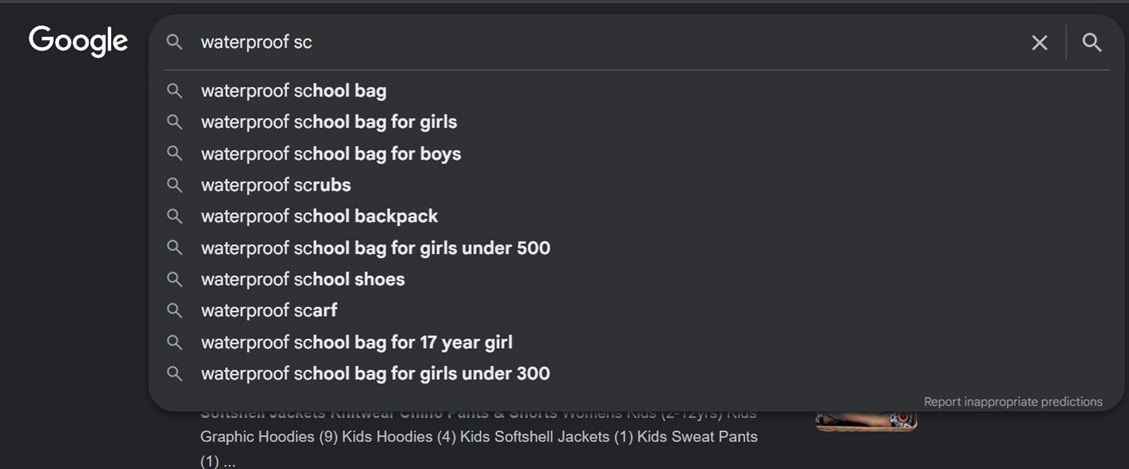
Kenyan parents avoid searching for school wear with generic terms. Parental online searches are precise and task-oriented, driven by specific needs like school requirements.
Parents solve a problem with their search, such as a child outgrowing shoes or needing warmer clothing for the July school term. This search behaviour is not casual browsing.
Common search patterns use attribute-based queries like "non-scuff school shoes Nairobi" or "grey school shorts for boys Kenya". Parents also search by use case, such as "waterproof school bags for primary school" or "warm sweaters for winter term".
Long-tail keywords indicate a high purchase intent. A parent using these terms knows their exact need and seeks a local supplier with available stock.
Why Boys and Girls Categories Miss School Wear Demand
A website structured with only "Boys" and "Girls" navigation forces parents to work unnecessarily hard to find items. For example, a mother seeking "school socks" must click into "Boys", then "Boys Accessories", before repeating the process under the "Girls" section.
This multi-step journey is inefficient and creates a poor user experience. The site structure fails to match the parent's shopping task.
A generic site structure is a significant SEO handicap. A category page labelled "Boys" is too broad to rank for a query like "durable school trousers for boys in Nairobi".
Google cannot determine if a general "Boys" page is a better match than a competitor's dedicated "Boys School Uniforms" page. High-value products like school uniforms become invisible in search results for the terms that drive sales.
Restructuring Kidswear Categories for Parent Search Intent
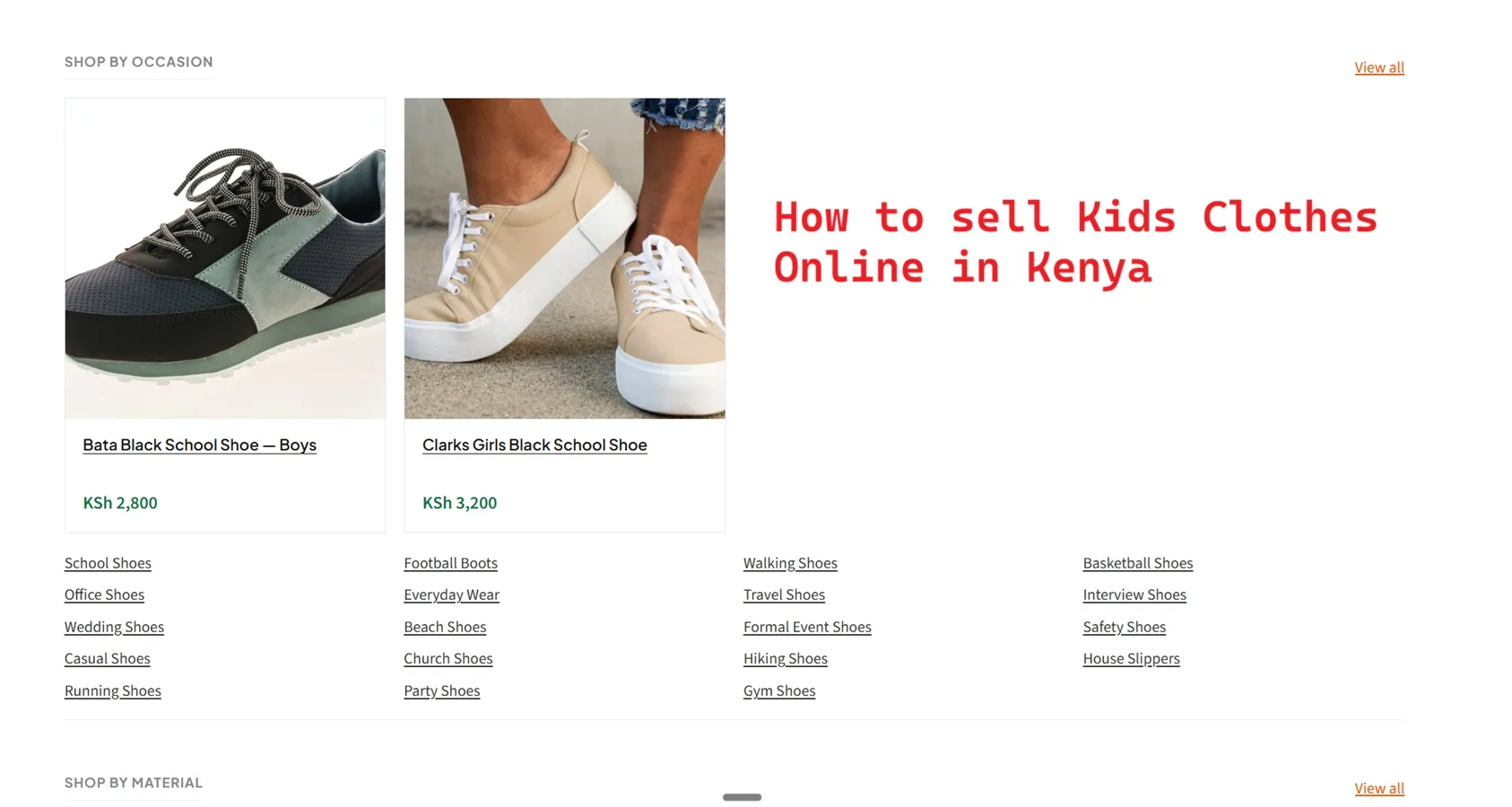
A website's structure must mirror how parents think and search to capture high-intent traffic. Kidswear shops should move from product-centric labels to categories based on use cases, milestones, and attributes.
An effective structure includes a primary 'School Uniforms' category, subdivided into 'Nursery School Uniforms' and 'Primary School Essentials'. A 'Back-to-School' category can group items like bags and stationery.
Additional use-case categories could include 'Durable Playwear' for after-school clothes or geo-specific topics like 'Toddler Weather Gear for Nairobi'. An intent-driven structure makes a shop a practical resource and improves relevance for high-value search queries.
SEO Benefits of Use-Case Categories
A use-case categorisation strategy offers direct, measurable SEO benefits. Dedicated pages for terms like "School Shoes" or "PE Kits" create highly relevant landing pages for specific parent searches.
This page-level relevance significantly improves ranking chances for high-converting, long-tail keywords.
An intent-driven category structure enhances user experience. A parent landing on a page that matches their search query is more likely to stay, browse, and purchase.
This user behaviour reduces bounce rates and sends positive quality signals to Google. A logical structure also creates a clean site architecture for a powerful internal linking strategy.
An internal linking strategy distributes authority across key product pages, boosting their search visibility in Kenya. This benefit is a direct result of the organised, user-centric structure.
Practical Steps for Semantic Category Implementation
A transition to a semantic, use-case structure is a methodical process. The process requires planning but is achievable for any business owner. The following steps outline how to begin implementation.
- 1. Audit Your Current Structure and Products: Review your existing categories. Identify which high-value products, like school shoes or uniform items, are currently hard to find. Make a list of all your products and their key attributes (e.g., durable, waterproof, cotton).
- 2. Conduct Parent-Centric Keyword Research: Use simple tools like Google's search suggestions or think like a customer. What would you type to find specific school items? Look for queries like "grey school sweaters Kenya" or "black leather school shoes size 4."
- 3. Plan Your New Category Structure: Based on your audit and research, map out the new categories and sub-categories. Group products logically based on use case (School Uniforms, Sportswear) or milestone (Toddler, Pre-Teen).
- 4. Implement and Redirect: Create the new category pages on your e-commerce platform (e.g., Shopify, WooCommerce). A permanent 301 redirect for any old category URLs to the most relevant new page preserves SEO value and prevents broken links.
- 5. Monitor Performance: Use Google Search Console to track clicks and impressions for your new category pages. Watch for an increase in visibility for the specific long-tail keywords you are now targeting.
Crafting Product Descriptions for Specific School Wear Needs
Product descriptions must support the restructured categories. Each description should address the specific pain points of a Kenyan parent, not just list product features. The copy must naturally integrate long-tail keywords and product attributes.
A product description for school shoes should move beyond "Black Leather Shoes". Effective copy includes phrases like "durable, non-scuff leather for active school days" and "comfortable, breathable lining for Nairobi's weather."
The description should also answer common questions, such as cleaning difficulty or sole flexibility. This detailed approach improves SEO and builds parental trust for a purchase decision.
Using structured data, known as Schema markup, helps products stand out in search results. Schema can highlight price, availability, and reviews directly on the search page.
How to Use Community Search for Kidswear SEO
Many Kenyan parents begin their search for recommendations within digital communities like WhatsApp and Facebook before using Google. These local groups are powerful channels for product discovery. A complete SEO strategy must account for this off-Google search behaviour.
A business name must be easy to share and contact information must be readily available. Satisfied customers should be encouraged to leave reviews on a Google Business Profile, as this social proof is often shared in community groups.
Your Google Business Profile must be optimised for local searches like "school uniform shop near me" or "kids clothes shops in Kilimani". Visibility in community discussions and on Google Maps creates a trustworthy presence. This dual visibility captures parents at multiple points in their buying journey.
Measuring the Impact of Semantic Category Changes
The success of a new category structure requires tracking metrics that connect site performance to sales. Business owners can monitor key performance indicators (KPIs) using free tools like Google Analytics 4 (GA4) and Google Search Console.
Track Organic Traffic and Keyword Rankings
Monitor organic traffic to new category pages like 'School Shoes' or 'PE Kits'. In Google Search Console, check if keyword rankings are improving for the targeted long-tail queries.
Analyse Conversion and Bounce Rates
Analyse the conversion rate by category in GA4. A higher conversion rate on new, specific pages is direct proof of success. A lower bounce rate on these pages also confirms that the structure is satisfying user intent.
Regularly reviewing this performance data provides the actionable feedback needed to refine the SEO strategy. This data also proves the return on investment for the restructuring project.
Key Semantic SEO Actions for Kidswear Shops
| Action | Primary SEO Impact | Recommended Tool |
|---|---|---|
| Create Use-Case Categories | Improves ranking for long-tail keywords | Google Search Suggestions |
| Optimise Product Descriptions | Increases relevance for specific attributes | Your E-commerce Platform |
| Set Up 301 Redirects | Preserves existing link equity | Your E-commerce Platform |
| Monitor Category Performance | Measures traffic and conversion lift | Google Analytics 4 / Search Console |
How to Implement Your 2026 Semantic SEO Roadmap
Shifting from a generic product list to a parent-centric online shop is an effective strategic move for a Kenyan kidswear business in 2026. The approach is a long-term commitment to serving customer needs, not a one-time fix.
A competitive advantage belongs to businesses that make it easy for a busy parent to find specific items like durable school shoes or a PE kit. This ease of use is a direct result of a semantic site structure.
The immediate action is to audit current website categories and product lists. This audit should identify the most common, problem-solving searches that customers perform.
Restructuring a site to answer these queries directly positions a shop to capture high-value traffic. Competitors using a generic structure are likely missing this traffic.
[Book SEO consultation]